The seven phases
This is the plan, step by step. Each phase shows what the founder wrote by hand, what the platform does about it, and who walks alongside the family.
At a glance
Understand the system and the decisions ahead.
Find resources, make informed decisions, and support your family.
Create a path toward a meaningful future beyond the conviction or sentence.
Navigate
Phases 1 and 2. Understand the system and the decisions ahead.
01Indictment
Understand what's happening.ShowHide
Indictment
From the plan
- Help prepare
- Resources
- Expectations
What the platform does
- A three-step setup picks the phase and builds the starter checklist.
- A plain-language guide to what happens next, from first charges to sentencing.
- A list of questions to bring to your attorney, so meetings count.
- The document vault opens, so court papers and letters live in one safe place.
- A family member or friend is set up as the account manager from the start.
02Sentencing
Prepare for what comes next.ShowHide
Sentencing
From the plan
- Resources prep for prison
- Help with assignment (designation)
- Expectations
- Contacts: Jeff Grant, Walter Pavlo, Sam Mangel
- Enroll in our program
- Have a family member or friend manage the account
Named people and organizations are planned partners or example referrals unless their directory listing says Verified partner.
What the platform does
- A designation and facility guide: how placement works and what you can ask for.
- A self-surrender checklist for the weeks before reporting.
- A directory of consultants for families who want a human guide. Consultants are not lawyers.
- Notes on the presentence interview, written as information, not legal advice.
- The family finishes enrolling and takes over the account.
Prepare
Phases 3 and 4. Find resources, make informed decisions, and support your family.
03Incarceration
Navigate life inside.ShowHide
Incarceration
From the plan
- How to report; commissary; calls; etc.
- Initial profile page and communication
- BRAVE Church: BSF, PF (Prison Fellowship), Mentors, Inmate Church, Chaplains, Gloo
- Build profile and program
- Assure FSA / SCA and other numbers
- Connect with an outside church in your area
- Connect with HUBS for support
- Family or friend manages the profile and mails to you
Named people and organizations are planned partners or example referrals unless their directory listing says Verified partner.
What the platform does
- A reporting-day checklist and guides for commissary and phone setup that link to official channels.
- The person's profile page, managed by the family.
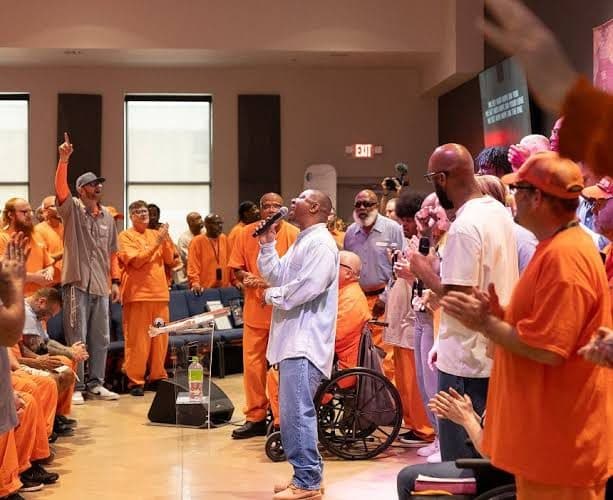
- Faith connections: mentors, chaplains, church services inside, and an outside church near home. BRAVE Church in Denver, the founding church partner, runs campuses inside two Colorado prisons. Bible Study Fellowship, Prison Fellowship and Gloo are planned partners, with no affiliation implied.
- The release-date estimator: good conduct time, First Step Act credits and Second Chance Act halfway-house time.
- Matching with an outside church near where they will come home, and with support hubs as they join the directory.
- Letters and emails drafted here, sent by the family through their own CorrLinks account.
How FSA credits work
Never forward their calls
By design: the family sends every message
04Return to Community
Transition from custody to community.ShowHide
Return to Community
From the plan
- Church engagement
- HUBS for support
- Job hiring / training
- Support items needed
What the platform does
- A halfway-house and home-confinement checklist.
- Job and training leads from partner programs as they join the directory.
- A support-items list: ID, phone, clothes, transit, a first-week meal.
- Church engagement and support hub check-ins.
Two ways this phase can look
A Residential Reentry Center is a supervised residence run under contract with the Bureau of Prisons. The person lives there, signs in and out, works or looks for work, and pays part of their income toward the stay. It is still custody, and each RRC sets its own check-in and pass rules.
- An RRC checklist: intake paperwork, house rules, sign-out and pass procedures, curfew.
- Job-search and employment-verification steps, with a plan for getting to work.
- A plan for the subsistence payment (25 percent of gross income) and a savings goal for moving out.
- A guide to how RRC placement works and what the family can do.
The person lives at an approved home, under monitoring, and follows a schedule approved in advance. Most people on federal home confinement are supervised through a Residential Reentry Center. It is still custody, and the rules come from that placement.
- A home-confinement checklist: monitoring equipment, check-in schedule, approved address and house rules.
- Steps for the weekly activity schedule and for asking for changes.
- Employment verification and visitor rules, written for the whole household.
- What to do, step by step, if the monitor or phone stops working.
- A home-confinement guide for everyone living in the home.
The family picks the track in the app, and the checklist and guide follow it. Not sure yet? Pick both.
Rebuild
Phases 5 and 6 and 7. Create a path toward a meaningful future beyond the conviction or sentence.
05Completion of Sentence
Move forward with greater independence.ShowHide
Completion of Sentence
From the plan
- Continued resources and support to assure compliance
What the platform does
- A supervision calendar and reminders for reporting dates.
- A checklist for the first months of supervision: conditions, reporting dates, travel rules and proof of work.
- Continued church and support hub connections.
- Everything stays in the same case record.
06Completion of Probation
Reach the milestone of being off paper.ShowHide
Completion of Probation
From the plan
- Now off paper
- Continue rebuilding life and growing
What the platform does
- The off-paper milestone recorded as an outcome.
- The family keeps the case record and documents to use for job, housing and church applications.
- Optional: keep using the journal and partner connections.
07Supporting Others
Turn experience into a resource for someone else.ShowHide
Supporting Others
From the plan
- Restoration
- New chapter
- Giving back
- Ultimate impact
What the platform does
- A checklist for becoming a mentor to a family that is just starting, through a church or support hub.
- A journal to write the story down and share it with a church or support hub.
- Give back to the next family starting at phase one.
One record, start to finish
Every family has one case.
The seven phases are simply its status. The same case carries the family from phase 1 to phase 7. Documents, checklists, credits and connections carry forward, so nothing gets rebuilt between stages.
The family stays the account manager the whole way and decides what partners can see.
Create a free account